Cicero's On Duties: The Non-Stoic Who Saved the Stoa
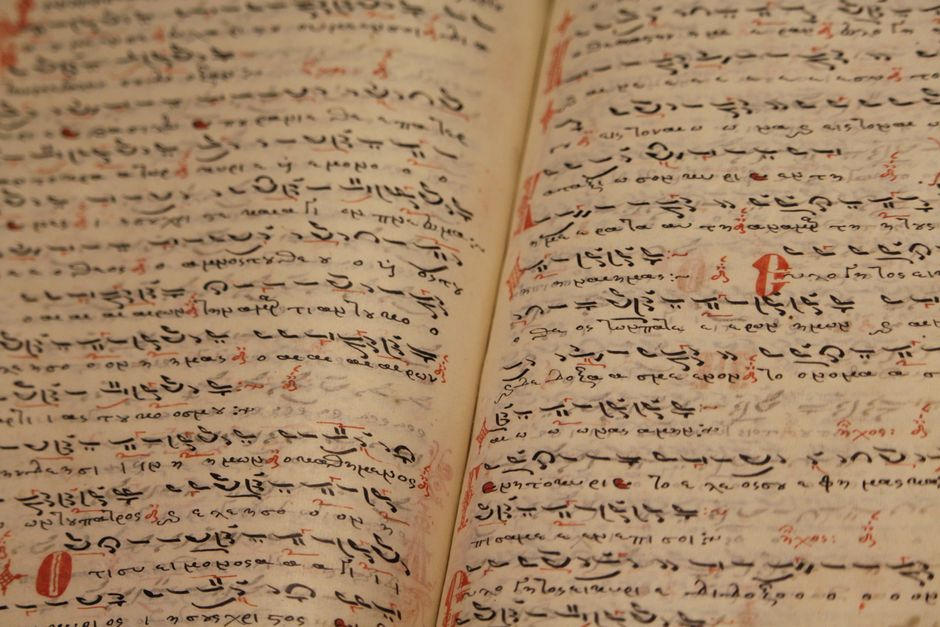
Cicero was not a Stoic. He said so himself, repeatedly, with the satisfied tone of a man who considered Academic skepticism the more intellectually respectable option. And yet On Duties (De Officiis), written in 44 BCE over a frantic forty-four days after Julius Caesar’s assassination, preserved more Stoic ethical theory than almost anything the Stoics themselves left behind.
That’s the paradox worth understanding before you decide whether to read it.
Was Cicero a Stoic?
No — and he’d have found the question mildly insulting. Cicero was an Academic skeptic, a follower of the Platonic tradition that held all philosophical claims open to doubt. He thought the Stoics were brilliant and frequently wrong, especially on their more extreme positions: that only the wise man is truly free, that all vices are equally bad, that virtue is the only good with no exceptions.
He engaged with Stoicism more seriously than almost any other Roman writer, translated Stoic texts, and used Stoic frameworks throughout his work. But he used them the way a good lawyer uses a strong argument — because it serves the case, not because he’s converted.
The short answer: Cicero was a Stoic fellow-traveler who thought the Stoics overclaimed. Which, ironically, makes On Duties more useful than a true-believer’s account would have been. You can see exactly where the Stoic argument is strong enough that even a skeptic accepts it, and where Cicero quietly substitutes his own view.
What Actually Survived
The Stoic school produced systematic ethical philosophy for centuries. Chrysippus alone reportedly wrote over 700 works. What we have: fragments, summaries, and other people’s descriptions. The three primary Stoics most people read — Marcus Aurelius, Epictetus, Seneca — are not the philosophers of the system. Marcus kept a private journal. Epictetus was a teacher whose lectures were transcribed by a student. Seneca wrote letters and essays, brilliant ones, but deliberately unsystematic.
The underlying architecture — the theory of kathêkon (appropriate action), the four cardinal virtues, the idea that virtue is the only genuine good — gets mentioned but rarely explained at length in those texts.
Cicero explains it. His main source for On Duties was Panaetius, a second-century BCE Stoic philosopher whose own works are lost. Cicero translated, adapted, and occasionally argued with Panaetius, and in doing so handed us the closest thing we have to a Stoic ethics textbook from the middle Stoa period.
What the Book Actually Argues
On Duties is addressed to Cicero’s son Marcus, studying in Athens, which gives it a fatherly directness that cuts against the image of Roman oratory. The argument across three books is tighter than the epistolary format suggests.
Book I: What is honorable (honestum)? Cicero maps this onto the four Stoic virtues — wisdom, justice, courage, temperance — and argues that appropriate action flows from understanding our dual nature as rational beings and social animals.
Book II: What is useful (utile)? How do we actually achieve security, reputation, resources? This book is more Roman-practical than Stoic-theoretical, but the framework is still the Stoa’s.
Book III: The apparent conflict between the honorable and the useful. Cicero argues, with Stoic backing, that the conflict is always illusory — anything genuinely dishonorable is not truly useful. This is the book that influenced natural law theory for the next two thousand years.
The whole structure is Stoic. Cicero just couldn’t help editorializing.
Where He Diverges (and Why It Matters)
Cicero rejects Stoic “paradoxes” — the infamous claims that only the wise man is truly free, that all virtuous acts are equally virtuous, that any moral error is equivalent to any other. He finds these rhetorically useless and philosophically overclaimed.
He also pulls away from the strict Stoic position that virtue is the only good. He was an Academic; he thought health, wealth, and relationships were genuine goods, not merely “preferred indifferents.”
This isn’t a minor footnote. It means On Duties presents a more moderate, socially embedded ethics than strict Stoicism delivers. Which might explain why it was among the most widely read secular works in medieval Europe — more accessible than the rigorous Stoic line, still grounded in the same architecture.
Read it knowing this and you get more out of it. The Stoic spine is visible; Cicero’s Academic flesh is also visible; you can see the seams.
Where It Belongs in a Reading Order
If you’re following the standard Stoic reading list, On Duties belongs after the primary texts — after Meditations, after the Enchiridion and Discourses, after Seneca’s letters — not before them. Here’s why: you’ll get more out of Cicero’s systematic account if you already have a felt sense of how these ideas show up in practice. Marcus and Epictetus give you that. Cicero gives you the theory that explains why they write the way they write.
Placed before the primary texts, On Duties reads like political philosophy with Stoic seasoning. Placed after them, it reads like a revelation — so that’s the framework behind it all.
One exception: if you’re specifically interested in Stoic political ethics or professional ethics, Book III can go earlier. It’s the most practical section and the argument about honesty in commerce holds up unsettlingly well.
For readers who want the philosophical background before the primary texts, Pierre Hadot’s The Inner Citadel covers similar systematic ground through Marcus specifically — a different angle on the same architecture.
Which Translation
The two you’ll actually find in print:
P.G. Walsh (Oxford World’s Classics) — academic-leaning, reliable, extensive notes on the historical context. This is the one to get if you want to understand what Cicero is responding to historically. The introduction is concise and the price is reasonable.
Walter Miller (Loeb Classical Library) — dual-language Latin/English, useful if you want to check the original. The translation is older and more formal; the Latin text is the reason to buy it.
For most readers: Walsh. The notes earn their keep.
Avoid the public domain translations. They exist, they’re free, they make Cicero sound like a Victorian parliamentarian.
The Honest Case for Reading It
You won’t find On Duties in most “start with Stoicism” guides, which tend to skip Cicero entirely or mention him in a footnote. That’s a loss.
If Seneca’s letters show you Stoicism as a practice, and Marcus shows you Stoicism as a struggle, Cicero shows you Stoicism as a system. The system matters. It’s what makes the practice coherent and the struggle meaningful.
A self-declared non-Stoic preserved the school better than most of its members. There’s probably a Stoic lesson in that somewhere.