Letters From a Stoic: Which Translation to Buy
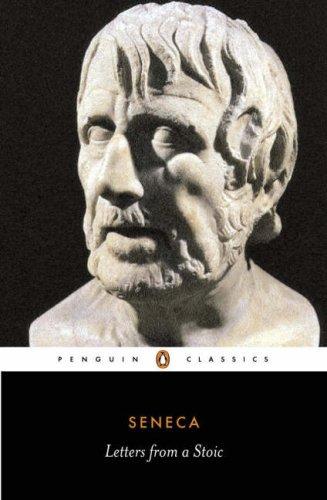
The short answer: Robin Campbell’s Penguin Classics edition is the best all-purpose translation of Seneca’s Letters. It reads fluently, it’s cheap, and it covers the letters most people actually want. But it only includes 41 of the 124 surviving letters, and if that bothers you — it should, a little — there are two better options depending on what you’re willing to spend.
Here’s what the three main translations look like on the ground.
The Contenders
Robin Campbell — Letters from a Stoic (Penguin Classics, ~$14, 41 letters)
Richard Mott Gummere — public domain, complete, free on Project Gutenberg
Margaret Graver and A.A. Long — Letters on Ethics (University of Chicago Press, ~$35, 124 letters)
One more exists: E. Phillips Barker’s 1932 translation, also public domain, also free, also mediocre. Skip it.
The Same Letter, Three Ways
Letter I is the obvious test case. Seneca opens it with one of the most quoted lines in all of Stoicism. Watch what happens:
Gummere (1917, free):
“Greetings, my friend! I want you to do this — claim for yourself each day as it comes, each night too; then the need will show itself for the morrow.”
Functional. A bit stiff. “The need will show itself” is an odd turn of phrase that makes you pause in the wrong way.
Campbell (1969, Penguin):
“Greetings from Seneca to his friend Lucilius. Keep on doing what you are doing; rescue and save yourself as much as you can. Gather and save the time which till lately has been forced from you, or filched away, or has merely slipped from your hands.”
Looser, warmer. Campbell is not afraid to unpack a compressed Latin phrase into plain English. You feel like you’re reading a letter, which is the point.
Graver and Long (2015, Chicago):
“Greetings from Seneca to his friend Lucilius. Keep doing what you are doing, my Lucilius: rescue and preserve yourself for yourself. Lay claim to and conserve that time which had been snatched away from you or had slipped past unnoticed.”
More precise than Campbell, less stiff than Gummere. “Lay claim to” carries a legal edge that’s probably closer to Seneca’s Latin vindica te tibi. The introduction to the Chicago edition spends considerable time on those three words, which is either reassuring or ominous depending on your purposes.
Who Should Buy Which
Buy Campbell if: you want to read Seneca this weekend and you don’t own anything yet. The 41 letters he selected are the best 41. The prose is immediate. You will actually finish it. For most readers, including me, this is the right answer. Roughly 240 pages in the current Penguin edition.
Buy Graver and Long if: you want the complete letters, you want scholarly apparatus, or you’re serious enough about Stoicism that you’ve already read the Epictetus and want to go deeper. The footnotes are genuinely useful, not just chest-beating. The introduction by A.A. Long — one of the most respected scholars of ancient philosophy still working — is worth the price on its own. The one downside: it’s a commitment. University of Chicago Press type runs small and the complete letters are long.
Use Gummere if: you want specific letters that Campbell omitted and don’t want to buy the Chicago edition. Letter LXXXVII on wealth and virtue, Letter CIV on travel — Gummere has them, Campbell doesn’t. Cross-reference is the only sensible use case. Reading Gummere straight through is a slog.
The Letters Campbell Leaves Out
This is the actual argument against Campbell, and it’s real. He chose letters that read well in isolation, which means letters that are essentially self-contained essays. Seneca is also good at sustained argument across several letters — the sequence on death, Letters XXVI through XXX, and the treatment of time in Letters LXXVII and LXXVIII — and Campbell’s curation breaks that continuity. You can paper over this with selective Gummere, but that’s inelegant.
If you’re going to read Seneca seriously, the honest move is: start with Campbell, then buy Graver and Long. About $50 total. Less than two paperback novels, and Seneca is better than most of them.
What About the Newer Penguin Selections?
Penguin has also published Selected Letters translated by Elaine Fantham (2010). Her English is clean and she includes some letters Campbell skipped. But the coverage is also partial, the book is harder to find, and it doesn’t improve on Campbell enough to replace him for a first read. If you find it secondhand, take it.
The Translation Doesn’t Fix the Wrong Approach
Seneca rewards slow reading more than any other Stoic. The Stoic reading list often puts him after Epictetus and Marcus Aurelius, which I think is backwards — Seneca is the one who sounds like a person, which makes him the easiest entry point. But wherever you start, reading his letters like a self-help manual rather than correspondence is how you lose the texture. He’s writing to a real person (probably), about a real life, in a conversational Latin that all three translations are trying — with varying success — to preserve.
Campbell gets closest. That’s why he’s still in print after 55 years.