Best Books on Stoicism: Three Tiers, No Padding

Every “best Stoicism books” list you’ll find online is the same flat ranking: Meditations, The Obstacle Is the Way, maybe Epictetus, then fifteen affiliate links wearing turtlenecks. Nobody tells you these books are doing completely different things, for different readers, with different relationships to what Stoicism actually is.
On this list:
So here’s a tiered list instead. Three tiers. Honest about what’s in each one.
Tier One: The Actual Stoics
These are the sources. Everything else is commentary on these, or commentary on that commentary. If you skip this tier and read only modern repackaging, you are getting Stoicism filtered through someone else’s agenda — usually a productivity agenda Marcus Aurelius would have found baffling.
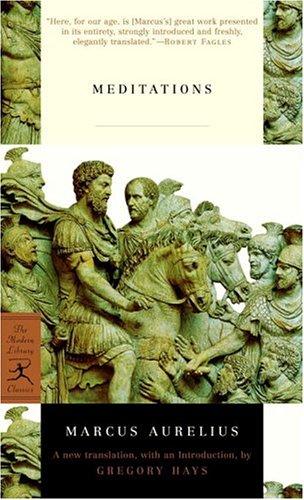
Meditations — Marcus Aurelius The one everyone cites and fewer people finish. It’s a private journal written by a Roman emperor to himself, never meant for publication, which means it’s repetitive and raw in ways that make it better, not worse. The translation matters enormously here. Gregory Hays (Modern Library, 2002) is the most readable modern English version; Robin Waterfield (Basic Books, 2021) is the most accurate. The full breakdown is here if you’re choosing between them. Skip the free Project Gutenberg translations — they’re stiff Victorian prose that makes Marcus sound like a bureaucrat.
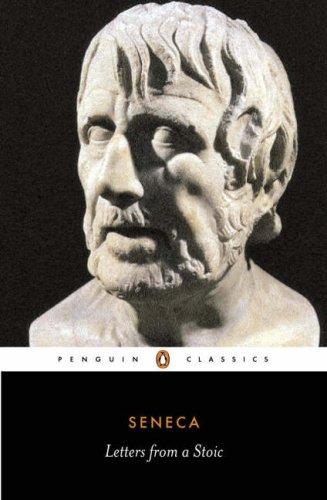
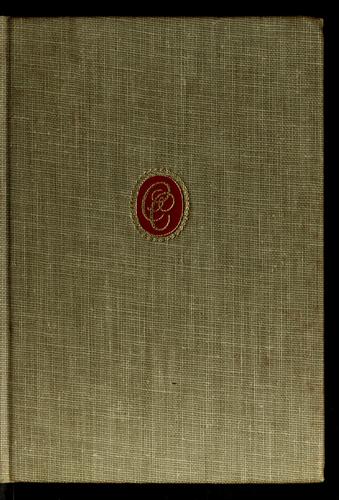
Letters from a Stoic — Seneca Properly Epistulae Morales ad Lucilium, 124 letters written to a friend in Seneca’s last years. This is the most readable ancient Stoic text by some distance. Seneca was a working writer, not a classroom teacher, and it shows — he argues, doubts, circles back, contradicts himself slightly. The Penguin Classics edition (Robin Campbell translation) selects 40 letters and is a decent sampler. The complete letters in Robin Campbell or Richard Mott Gummere give you the full arc. Reading order matters here; don’t just start at letter one.
Discourses and Enchiridion — Epictetus Epictetus wrote nothing himself. His student Arrian took lecture notes, and those became the Discourses. The Enchiridion is Arrian’s condensed summary of the Discourses, short enough to read in an afternoon. Which one to read first is a genuine question with a non-obvious answer. Robin Hard’s translation (Oxford World’s Classics) is the scholarly standard; the A.A. Long version (Stanford) has the best introductory apparatus.
These three authors are the Stoic canon. Everything else either explains them, applies them, or quietly distorts them.
Tier Two: Real Scholarship Worth Owning
The Stoics — F.H. Sandbach (1975) Short, dense, out of fashion with the Stoicism-as-lifestyle crowd, and therefore excellent. Sandbach was a Cambridge classicist who wrote for readers willing to engage with doctrine on its own terms. This is where you find out what the Stoics actually believed about physics, logic, and cosmology — the parts that don’t fit on a motivational poster. Under 200 pages; no padding.
Epictetus: A Stoic and Socratic Guide to Life — A.A. Long (2002) Long is among the most respected Anglophone scholars working on Hellenistic philosophy, and this is his readable case for Epictetus as the most philosophically rigorous of the three major Stoics. Not a pop book. Requires attention. Rewards it.
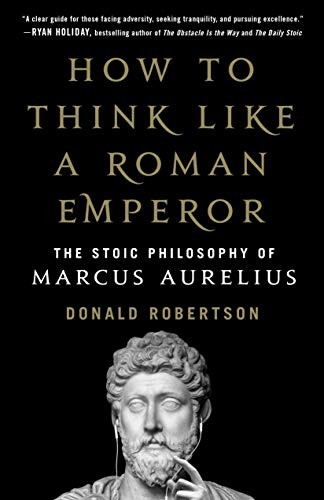
How to Think Like a Roman Emperor — Donald Robertson (2019) Robertson is a cognitive behavioral therapist who has spent decades on the connection between Stoicism and CBT. This is the one modern-author book that belongs in this tier, because Robertson cites primary sources, explains the philosophy accurately, and acknowledges where the modern application diverges from ancient doctrine. It uses Marcus Aurelius’s biography as a frame, which is a risk that mostly works.
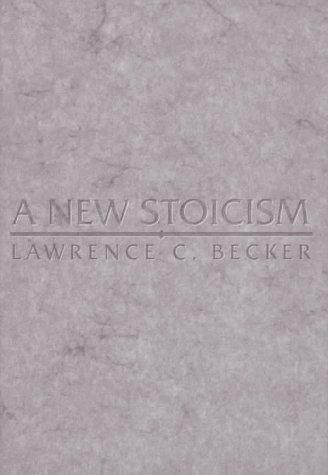
A New Stoicism — Lawrence Becker (1998, revised 2017) For readers who want to know what a serious contemporary philosopher thinks Stoicism should look like if you stripped out the ancient cosmology and rebuilt it from scratch. Academic in register. Not for beginners. Essential if you’re past the beginner stage.
Tier Three: Airport Stoicism
These books exist. Some of them are fine. You should know what tier they’re in.
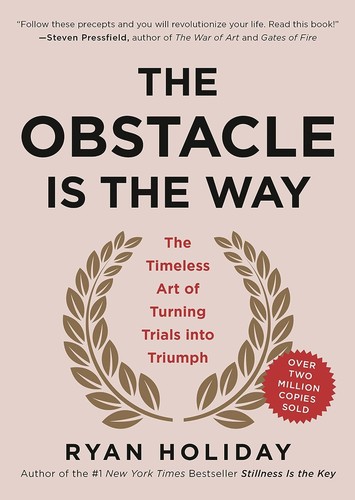
The Obstacle Is the Way — Ryan Holiday (2014) Holiday reads the Stoics and reports back, with a focus on adversity-as-opportunity. The Stoic philosophy here is real but selectively presented; the book is more interested in successful people than in askesis or cosmology. It’s a good introduction to the idea that Stoicism might be useful. It is not a substitute for reading Seneca.
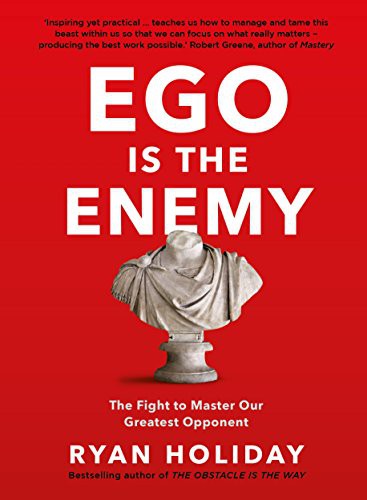
Ego Is the Enemy — Ryan Holiday (2016) Same structure, different virtue. The Stoic scaffolding is thinner here. Useful as a prompt to pick up the real texts.
The Daily Stoic — Ryan Holiday and Stephen Hanselman (2016) A year of daily quotes and meditations. The quotes are often accurate; the interpretive paragraphs are often a stretch. I know several people for whom this was the entry point that led to reading Meditations properly. That’s a legitimate function. It’s just not Stoicism — it’s a Stoicism-flavored journal prompt book, and there’s no harm in knowing that upfront.
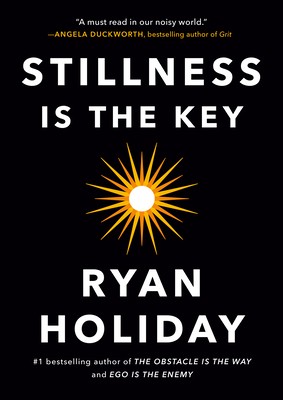
Stillness Is the Key — Ryan Holiday (2019) At this point Holiday is writing about a composite virtue that draws on Stoicism, Buddhism, and Taoism simultaneously. Which is fine. Just don’t mistake it for Stoic philosophy specifically.
What to actually buy
If you’re starting from scratch, the Hays translation of Meditations and Campbell’s selected Seneca letters give you the core for a modest outlay. That’s enough Stoicism for most purposes.
If you want to go deeper, add Epictetus (Robin Hard, Oxford) and then Sandbach. At that point you have a working library, not a shelf decoration.
The Tier Three books are fine to read after that, if you enjoy them. But reading Holiday before reading Marcus Aurelius is reading the map before the territory — and this particular map has been drawn with a productivity highlighter.
The full reading order if you want the ten-book version, sequenced to build on itself rather than repeat.