Meditations: Which Translation to Buy (and Which to Skip)
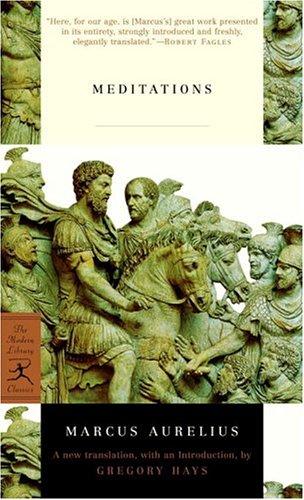
Buy the Gregory Hays translation (Modern Library, 2002). That’s the answer. If you want to know why — and which free translation is actually fine, and which famous one will make you give up on Marcus Aurelius entirely — keep going.
The problem with Meditations translations
Marcus Aurelius wrote in compressed, private Greek. He was writing notes to himself, not a book, so the original is terse to the point of rudeness. A translator has two options: keep the telegram style and trust you, or pad it into Victorian sentences. Most older translations chose padding.
That’s why people bounce off this book. They’re not bouncing off Marcus. They’re bouncing off a translator who died before the lightbulb.
The short version
| Translation | Year | Style | Verdict |
|---|---|---|---|
| Gregory Hays | 2002 | Spare, modern, punchy | Buy this one |
| Robin Waterfield | 2021 | Modern, richly annotated | Best if you want the notes |
| Robin Hard | 2011 | Accurate, slightly formal | Strong second |
| Martin Hammond | 2006 | Scholarly, careful | Good, drier |
| Maxwell Staniforth | 1964 | Readable mid-century Penguin | Fine, but Hays does it better |
| George Long | 1862 | Victorian, public domain | Free and survivable |
| Meric Casaubon | 1634 | Jacobean English | Skip unless you enjoy pain |
Why Hays wins
Hays translates Marcus the way Marcus wrote: short. Book 2 opens, in Hays, with “When you wake up in the morning, tell yourself: the people I deal with today will be meddling, ungrateful, arrogant, dishonest, jealous, and surly.” You can hear a person thinking.
George Long renders the same passage at nearly twice the length, with “busy-bodies” in it. Long isn’t wrong — he’s just writing for readers who also owned a horse.
The criticism of Hays is that he’s loose, and it’s fair. He trims, he modernizes, occasionally he paraphrases. If you’re writing a dissertation, use Hammond or Hard. If you want the book to actually change your Tuesday, use Hays.
Martin Hammond’s translation of Meditations
Martin Hammond’s 2006 Penguin Classics translation is the most faithful to the Greek of any widely available modern edition. That’s both its selling point and its limitation.
Hammond holds the structure of the original Greek sentence even when that makes the English slightly stiff. Where Hays will paraphrase a line to land in modern English, Hammond preserves the word order and syntax — you feel the architecture of Marcus’s thinking rather than a smoothed-out version of it. Scholars and serious students of ancient philosophy tend to prefer Hammond for exactly this reason.
It’s also the translation that Pierre Hadot’s The Inner Citadel uses as a reference point. If you plan to read Hadot alongside Marcus — and you should, eventually — Hammond is worth having for the cross-referencing alone. The same goes for anyone working through secondary academic literature on Marcus Aurelius.
The tradeoff: it reads drier. Not Casaubon-dry, but you feel the effort. Hammond replaced Maxwell Staniforth’s 1964 Penguin in the same series, and it’s the better pick of the two — more current scholarship, cleaner handling of the Greek idioms Staniforth sometimes smoothed over. But for a first read, especially if you’re coming to Stoicism cold, Hays will carry you further. Hammond rewards you more on a second read, when you already know the book and want to sit with the actual Greek thinking rather than Hays’s very good approximation of it.
Who should buy Martin Hammond’s Meditations: readers who want scholarly accuracy, anyone reading secondary literature alongside Marcus, and people already familiar with the text who want a closer look at the Greek. Not the right starting point for most first-timers.
If you want the notes: Waterfield
Robin Waterfield’s Meditations: The Annotated Edition (Basic Books, 2021) is the one to buy if you keep wondering who is Marcus talking about here and what does this Stoic term actually mean. The translation is clean and modern, close to Hays in readability, but the reason to own it is the footnotes on nearly every page, explaining the people, the philosophy, and the context Marcus assumed you’d already know. It’s the best on-ramp if this is your first serious Stoic text and you hate feeling lost. It costs more and reads slower because you’ll stop to read the notes, which is the point. If you just want Marcus’s voice with nothing in the way, that’s still Hays.
Maxwell Staniforth’s 1964 Penguin was the standard for a generation and is perfectly readable, but Hammond’s 2006 Penguin quietly replaced it — if you’re choosing new, there’s little reason to pick Staniforth over the newer options.
The free option
Long’s 1862 translation is public domain, which means it’s everywhere — Project Gutenberg, and built into reading apps that ship classics. It’s denser than Hays but completely readable once you accept the rhythm; thousands of people got their Stoicism from Long and turned out fine.
My honest advice: start with Long for free tonight. If Book 1 (the thank-you list — everyone finds it slow) doesn’t kill you and you make it to Book 2, you’ll know whether you want this book in your life. Then buy the Hays and read it properly. You’ll end up reading Meditations more than once anyway; it’s that kind of book.
Quick answers
Which translation of Meditations is best? Gregory Hays (Modern Library, 2002) for almost everyone — the most readable modern English, the closest to how Marcus actually wrote. Use Hammond or Hard instead only if you need word-level scholarly accuracy.
Is the Gregory Hays translation good? Yes, and it’s the one most first-time readers should buy. The fair criticism is that it’s loose — Hays trims and modernizes. That’s a feature for reading and a drawback for citing in academic work.
What’s the best free translation of Meditations? George Long’s 1862 version. It’s public domain, so it’s on Project Gutenberg and built into most apps that ship classics. Denser than Hays, but completely readable once you settle into the rhythm.
Which Meditations translation has the best notes? Robin Waterfield’s 2021 annotated edition (Basic Books) — footnotes on nearly every page explaining the people, terms, and context. Best if it’s your first serious Stoic book. Not sure it’s worth your time at all? Is Meditations worth reading? makes the honest case.
Is Martin Hammond’s translation of Meditations good? Hammond’s is the most faithful to the Greek of the widely available modern translations and the stronger of the two Penguin Classics editions (it replaced Staniforth). It reads drier than Hays and rewards readers who already know the text or are working through secondary literature. For a first read, Hays is more approachable; for a second read or scholarly use, Hammond is the better tool. If you’re comparing editions, the hardcover guide covers which physical editions use which translations.
Which translation should I avoid? Meric Casaubon’s 1634 version, which shows up in cheap “beautiful classics” hardcovers because it’s free to reprint. Check the translator’s name before you buy any pretty edition. (Planning your read? Here’s how long Meditations actually takes.)
The one to avoid
Casaubon (1634) appears in a lot of “beautiful hardcover classics” editions because it’s free and old publishers love free. It reads like a legal deposition delivered through a wall. If your only contact with Marcus Aurelius was a gift-shop Casaubon, you’ve been mugged, not introduced.
Check the translator’s name before you buy any pretty edition. The cover is the least important part of this particular book — Marcus would be the first to say so.