Is Meditations Worth Reading? Yes, With Caveats
Yes. But the people who tell you it changed their life are often glossing over the parts that made them put it down three times first.
Here is an honest case for reading Meditations — one that takes the real objections seriously instead of waving at them.
The objections are real, so let’s name them
It’s repetitive. Marcus Aurelius writes about the shortness of life, the indifference of the universe, and the need to focus on what you control — and then writes about it again, slightly differently, in the next entry. And the one after that. Some passages feel like copies of copies.
It has no structure. There is no argument being built. No chapters that depend on earlier chapters. You can open to Book 7 and read it before Book 2 and lose nothing. For a philosophy text, that’s unusual, and it feels like something is missing.
Book 1 is a slog. The first book is a catalogue of gratitude — Marcus listing what he learned from his grandfather, his teachers, his adoptive father. It reads like a very formal thank-you note. Readers who start at page one and push straight through often lose patience here and never reach the passages that reward them.
These complaints are not wrong. If you come to Meditations expecting the structured argument of Epictetus’s Discourses or the propulsive rhetoric of Seneca’s letters, you will be disappointed.
Why the repetition is actually the point
Marcus was not writing a philosophy textbook. He was writing to himself, probably daily, using writing as a practice — the way some people run the same route every morning not because they’ve forgotten where the route goes but because the running is the thing.
He was the most powerful person in the Roman Empire and he needed to remind himself, repeatedly, that power is nothing, that death comes for emperors as surely as for slaves, that the opinion of the crowd is not a reason to act or not act. He knew these things intellectually. He wrote them out because intellectual knowledge isn’t the same as the kind that holds under pressure.
The repetition isn’t a flaw in the text. It’s a record of a person fighting a very human tendency to forget what matters the second something goes wrong. Reading it, you feel that fight. That’s harder to fake than a polished argument.
On the lack of structure
No structure means you can pick it up for ten minutes and set it down without losing the thread. It also means it doesn’t age out of relevance — the middle is as good as the beginning and the end is as good as the middle.
Most books reward sustained attention and punish dipping in. Meditations is the opposite. That’s a feature if you read the way most people actually read: in fragments, between other things, while also thinking about eleven other problems.
It is worth knowing that starting with Book 2 instead of Book 1 gets you to the interesting material faster. Skip nothing permanently — just come back to the gratitude catalogue later, when you have context for who the people in it are.
What it offers that no summary captures
The clearest thing Meditations does — and no quote-aggregator website fully replicates this — is demonstrate a working method, not just conclusions.
Marcus doesn’t just write “death is nothing to fear.” He writes out the argument against fearing it, then circles back, then finds a new angle, then catches himself, then restates the thing more plainly. Watching that process across 12 books is different from reading a passage about mortality on a philosophy blog. You see a person using philosophy as a tool under real conditions, including conditions he found ridiculous and exhausting and unjust.
That distinction matters because most people come to Stoicism not as an academic interest but because something in their life isn’t working and they’re looking for equipment, not information. Meditations is equipment. The Daily Stoic is information. Both have their use, but they’re not the same use.
Who it’s probably not for
If you want a clear explanation of Stoic doctrine — what the philosophy holds, why it holds it, where it came from — Meditations is a poor starting point. Marcus assumes you already know Epictetus and the basic framework. He’s not explaining the dichotomy of control; he’s practicing it.
If you’re new to Stoicism, starting with the Enchiridion and then coming to Marcus makes more sense. You’ll recognize what he’s working with instead of wondering what he’s talking about.
If you want a book that builds to a payoff — a final chapter that resolves what came before — this won’t satisfy. It ends mid-thought, because Marcus died before he finished. Or possibly because it was never meant to finish.
The translation question
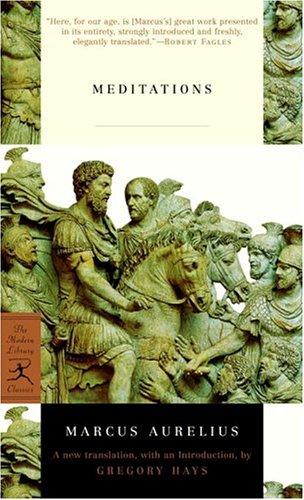
The translation matters more than it should. The Gregory Hays version (Modern Library) reads cleanly and doesn’t bury Marcus in Victorian formality. There’s more detail on what Hays actually does to the text here, including where his choices are contested. If you want a comparison of all the major options with sample passages, the full translation guide has them.
Don’t read the public domain versions first. The language flattens the urgency, and if the urgency goes, the whole argument for the book goes with it.
The honest bottom line
Meditations is worth reading because it shows what it looks like to take philosophy seriously enough to use it — imperfectly, repetitively, privately, without an audience in mind. That’s rarer than it sounds. The emperor of Rome kept a notebook of reminders to himself that he never intended to publish, and the reminders were mostly: slow down, you’re getting this wrong, try again.
That’s the book. Whether it’s worth your time depends on whether you find that kind of honesty useful.
Most people do.