The Daily Stoic: Good Gateway, Thin Philosophy
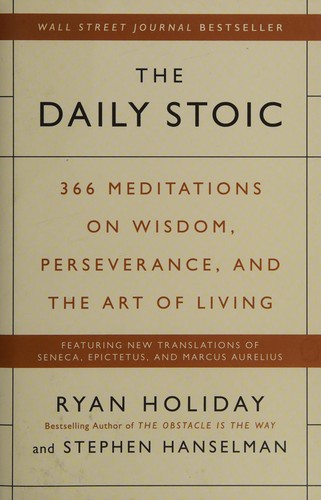
Ryan Holiday’s The Daily Stoic has introduced more people to Marcus Aurelius than any classics professor alive. That’s worth saying first, before the criticism, because it’s true and it matters.
The book is 366 daily readings, each built around a translated quote from Marcus Aurelius, Epictetus, or Seneca, followed by a paragraph or two of Holiday’s commentary. It’s tidy, it’s accessible, and if you read one page over breakfast every morning, you’ll finish it in a year. The design is genuinely good.
Here’s the honest review: The Daily Stoic is an excellent book for building a habit and a poor book for understanding Stoicism.
What It Gets Right
The curation is real work. Holiday and his co-author Stephen Hanselman pulled quotes from Meditations, the Discourses, the Letters, and On the Shortness of Life and organized them thematically — perception, action, will. For someone who has never touched the primary texts, this structure makes the philosophy feel navigable rather than overwhelming.
The commentary is readable and occasionally sharp. Holiday is a good writer. He knows his audience and he doesn’t condescend to them.
The gateway function is real. People finish The Daily Stoic and then pick up an actual copy of Meditations and read it cover to cover. That’s a win that deserves credit.
Where It Runs Shallow
The quote-plus-commentary format has a structural problem: you get 50-100 words of Stoic text and then Holiday’s interpretation, which tends toward the motivational. The original thinkers are grimmer, stranger, and more demanding than the framing suggests.
Marcus Aurelius in his own voice is not a life-coach. He’s a man writing private notes reminding himself not to be a coward, not to waste time on idiots at court, not to flinch from his own death. He fails at this constantly and knows it. The Daily Stoic version of Marcus reads tidier and more reassuring than the actual Meditations, which is why Gregory Hays’ translation can feel like a different book entirely when you finally pick it up. If you want a closer look at what Hays does to the text, I wrote about it here.
Epictetus gets the worst of the compression. The Discourses are long, sometimes cantankerous, full of extended arguments and Socratic drilling. In The Daily Stoic he’s reduced to punchy one-liners, which is almost the opposite of how he works. The man was a freed slave who taught philosophy through sustained argument, not aphorisms. The difference between Epictetus in Holiday’s book and Epictetus in his own is significant.
Seneca barely appears. His letters are among the most readable things in the Stoic canon — conversational, funny, death-obsessed in the best way — and this format can’t hold them. A letter is a letter. You can’t excerpt it into a daily devotional without losing whatever made it work.
The Translation Problem
The Daily Stoic uses its own translations, acknowledged as modified for accessibility. Some are fine. Some quietly flatten the philosophical precision. When you read a line from the Enchiridion in this book and then read the same line in Robin Hard’s Oxford translation, you’ll notice the original is less comfortable and more specific. That discomfort is the content.
A Specific Graduation Plan
If you’ve read The Daily Stoic or are reading it now, here’s where to go next — in order of lowest friction to highest.
1. Meditations, Hays translation Start here because it’s the author Holiday quotes most and it’s the most accessible primary text. You’ll recognize passages and discover how much context surrounds them. The full translation comparison lives here if you want to choose differently.
2. Letters From a Stoic, Penguin Classics Pick any letter and read the whole thing. Letter I (“On Saving Time”) is six pages. Letter LXXVII (“On Taking One’s Own Life”) will stop you cold. This is Seneca without the excerpt-trimming. The translation options are worth considering before you buy.
3. Enchiridion, then the Discourses The Enchiridion is short and works as a proof-of-concept. If it lands, read the Discourses. If the Discourses feel too long, read this first — the structure of that argument matters.
If you want a full reading order across all three thinkers, the Stoic reading list has one with reasoning for each choice.
The Daily Stoic is not a substitute for the sources. It knows it isn’t — Holiday says so explicitly. The problem is that readers finish it and feel like they’ve read Stoicism rather than an introduction to Stoicism. They haven’t. The real books are stranger, harder, and considerably more interesting. Marcus Aurelius would have found the wellness framing baffling. Read him anyway.