How to Read Meditations Without Quitting at Book 1
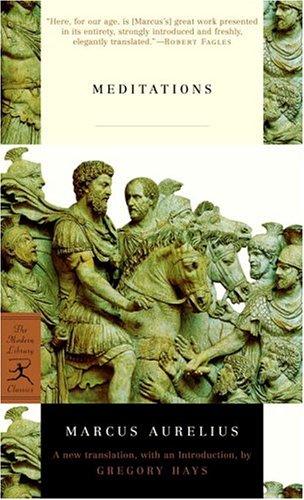
Skip Book 1. Come back to it last. This is the single most useful piece of advice for anyone who wants to know how to read Meditations and actually finish it. The rest of this post explains why, and gives you a book-by-book map for the whole thing.
Why Book 1 Is a Trap
Book 1 is Marcus listing every person who shaped him: “From my grandfather Verus I learned to be gentle and meek.” Thirty-odd acknowledgments, one after another, of people you’ve never heard of. It reads like a dedication page stretched across eight pages.
It’s not bad. It’s actually moving once you understand what you’re reading — a Roman emperor, privately, acknowledging his debts. But on a first read, before you know Marcus’s voice, before you’ve felt what the rest of the journal feels like, it registers as homework. Readers quit here. They shouldn’t. They should start at Book 2.
Books 2 and 3: Where the Voice Kicks In
Book 2, Section 1. “Begin the morning by saying to yourself: I shall meet with the busy-body, the ungrateful, arrogant, deceitful, envious, unsocial.” That’s Marcus Aurelius. You’re in.
These two books are short and punchy. Marcus wrote Book 2 while on military campaign among the Quadi — the heading says so — and you can feel the urgency. He’s reminding himself, not instructing you. The compression is the point. Don’t read for argument; read for the rhythm of a mind talking itself back into steadiness.
Book 3 extends this. A few passages here (“never esteem anything as of advantage to you that will make you break your word”) are as quotable as anything in the whole text.
Books 4–6: The Core of the Book
If Meditations has a philosophical center, it’s here. The four elements. The shortness of life. The indifference of the cosmos. The absolute, teeth-gritted insistence on acting justly anyway.
Book 4 is the one to read slowly. “The universe is transformation; life is opinion” — if that sentence doesn’t stop you for a moment, you’re moving too fast. Mark it. Write it down. Then keep going.
Books 5 and 6 are denser. Marcus is working through the same themes repeatedly: the soul untouched by external bad, the uselessness of fame, the practice of returning to reason when passion hijacks the morning. Some of this repetition feels like spinning wheels. That’s fine. This was a private journal. He wasn’t editing for narrative momentum.
One note on translation here: if you’re finding Books 5 and 6 hard to follow, the issue might be your edition rather than the philosophy. The Gregory Hays translation (Modern Library) is the one I’d recommend — I’ve written at more length about what Hays actually does to the text if you want the full comparison, but the short version is: he makes it readable without dumbing it down. The older George Long translation has its devotees, but the prose can bury a 21st-century reader in subordinate clauses.
Books 7–9: Repetition as Instruction
Marcus returns to the same ideas — almost the same sentences — he’s already written. This is deliberate. Stoic practice is practice in the literal sense: you say the thing again until it lives in the body, not just the head.
If you’re reading Meditations as philosophy, this section will frustrate you. If you’re reading it as a training manual for your own attention, you’ll start to see why the repetition is the content.
Book 9 is where Marcus confronts death most directly. He’s unflinching in a way that isn’t stoic (lowercase, the cultural shorthand) but actually Stoic: he’s thought about it, argued about it with himself, and arrived somewhere specific. Worth reading carefully.
Books 10 and 11: Late and Tired
The tone shifts. These books feel more worn. The arguments are familiar by now; Marcus is running the drills again. Some readers find this the hardest stretch of the whole text.
Short sessions work here. A few sections at a time, not a whole book at once.
Book 12: The Last One
Remarkable ending, whether intentional or not. The final sections circle back to what Marcus has been saying the whole time, but there’s a quality of arrival to them. The closing sections on what a person actually needs are among the best passages in the journal.
Now Go Back to Book 1
After Book 12, return to the beginning. Read Book 1 now knowing who Marcus is, knowing the loneliness of these private entries, knowing how privately maintained his sense of gratitude had to be for a man who spent decades on campaign and in government.
The list of debts hits completely differently. “From my mother, to be pious and bountiful; to abstain not only from evil deeds, but even from evil thoughts; and to live with a simplicity which is far from customary among the rich.” You’ll recognize something in it.
This is also why choosing the right translation matters more than most people admit — the difference between a flat rendering and Hays’s sharper phrasing is the difference between reading at arm’s length and reading something that lands.
The Practical Order
| Reading pass | Books | Goal |
|---|---|---|
| Start here | 2, 3 | Get the voice |
| Core read | 4, 5, 6 | The philosophy |
| Continue | 7, 8, 9 | Repetition-as-practice |
| Final stretch | 10, 11, 12 | Finish strong |
| Return | 1 | Now it means something |
Meditations runs 250–300 pages depending on edition. If you want to pair it with something shorter and more structured first, the Enchiridion will build the conceptual scaffolding that makes Marcus easier to follow — Epictetus taught the teachers who shaped Marcus’s worldview.
Start with Book 2. Marcus would have something dry to say about the person who reads about reading instead of reading.