Discipline Is Destiny by Ryan Holiday: Honest Review
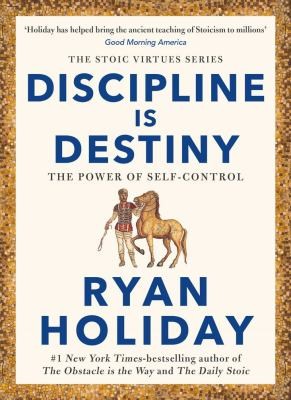
The short answer: Discipline Is Destiny is the best-written book in Ryan Holiday’s virtue series, and the one least likely to change how you think. If you’ve already read The Obstacle Is the Way, you will recognize the architecture — historical vignettes, one-paragraph chapters, a Stoic concept filed down to something you could put on a gym bag. That’s not quite a flaw, but it’s worth knowing before you spend the money.
What the book actually argues
The premise is that self-discipline — what Holiday, following the Stoics, calls sophrosyne or temperance — is not about punishment. It’s about freedom. The person who controls their appetites, sleep, speech, and body is more capable, not more constricted.
This is a real Stoic argument. Epictetus makes it repeatedly. Musonius Rufus, the Stoic nobody reads but really should read, built an entire pedagogy around it: physical training, dietary simplicity, voluntary discomfort. The argument has serious ancient backing, and Holiday marshals it competently.
The execution is a series of short chapters — most are 2 to 4 pages — anchored to a historical figure. Lou Gehrig’s work ethic. Queen Elizabeth I’s self-possession. Beethoven’s routine. Each vignette ends with a principle extracted for modern application. It’s the same structure as The Obstacle Is the Way and Ego Is the Enemy, deployed now in service of temperance rather than adversity or pride.
If you came in cold, having never read Holiday before, this would feel like a revelation. The writing is cleaner than in the earlier books. He’s gotten better at pacing and cutting. Some chapters land.
Where it repeats itself
The problem isn’t quality. It’s diminishing returns.
By the time Holiday writes about Marcus Aurelius waking before dawn and keeping a simple diet, you’ve encountered that material in at least three previous Holiday books. The Daily Stoic, which I’d describe as a good gateway to thin philosophy, hit it. How to Think Like a Roman Emperor by Donald Robertson hit it harder and with more psychological texture. Discipline Is Destiny hits it again.
The historical vignettes are researched, not invented, which puts Holiday ahead of the airport-self-help crowd. But the selection criteria appears to be: famous person who worked very hard and didn’t drink too much. That’s a narrow slice of what the Stoics actually meant by temperance. Seneca wrote about tempering anger, tempering speech, tempering the desire for wealth — the whole shape of a life moderated, not just the part about waking up early. Seneca on anger alone covers more psychological ground than this book does on the subject.
The absence of Seneca here is its own argument. When Holiday does cite ancient sources, he leans on Marcus and Epictetus. Seneca’s Letters — which have a reading order worth following — contain some of the most precise writing on self-control that exists. Letter 8. Letter 18. Letter 83 on sobriety. None of it appears here at length.
Versus the primary sources
Epictetus in the Enchiridion covers the core argument in about 30 pages. The dichotomy of control — what Epictetus actually wrote, not what Instagram quotes claim — is inseparable from self-discipline. If you control only your own will and judgments, then the work of philosophy is disciplining those judgments. That’s the whole game. Epictetus makes it at chapter length. Holiday makes it at book length.
This isn’t snobbery. Primary sources are harder. They don’t have Lou Gehrig in them. But if you want to understand why the Stoics cared about temperance, 30 minutes with the Enchiridion will do more than 300 pages of mediated examples. The Enchiridion vs Discourses question is worth sorting out first if you’re deciding where to start.
The case for Holiday’s book is not that it replaces those sources. It’s a comfortable companion — something you read while the ancient texts sit waiting on the shelf. That’s a legitimate role. Price it accordingly.
Who this is actually for
| Reader | Verdict |
|---|---|
| New to Holiday and Stoicism | Start here or with The Obstacle Is the Way — either works |
| Read 1-2 Holiday books already | Diminishing returns; read Robertson instead |
| Want primary Stoic sources on self-control | Enchiridion + Seneca’s Letters 1-20 |
| Finished the ancient texts, want commentary | Pierre Hadot’s The Inner Citadel does this at a higher level |
The Ryan Holiday reading order matters here. Discipline Is Destiny is the fourth book in the virtue series (after The Obstacle Is the Way, Ego Is the Enemy, and Stillness Is the Key). If you’ve read the first three, you already know Holiday’s method. This book won’t surprise you.
The honest verdict
Discipline Is Destiny is a competent, occasionally stirring book about a genuinely important Stoic idea. The writing is Holiday’s best. The research doesn’t embarrass.
It will not tell you anything the ancient sources don’t tell you better. And if you’ve read two or more of Holiday’s previous books, you’ve already seen this room.
Buy it if you haven’t read Holiday before and want a readable entry point into Stoic virtue ethics. Otherwise go read Musonius Rufus, who wrote about self-discipline so directly that he makes even Epictetus look like he’s warming up.