Stoicism Books for Beginners: Ranked by Quit Risk

Most people who want to read Stoic philosophy never finish their first book. They download Meditations, read four pages of Book One, and quietly shelve it somewhere between good intentions and the unread Dostoevsky. This isn’t a discipline failure. It’s a sequencing failure. They picked the wrong first book.
On this list:
Seven common entry points, ranked from least to most likely to end your reading before it starts.
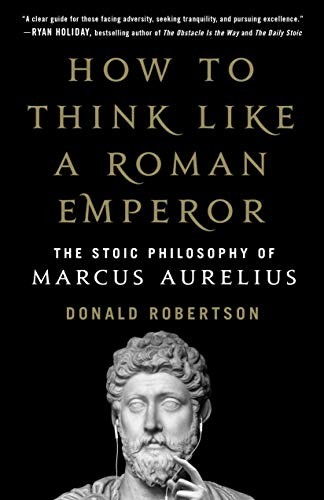
1. How to Think Like a Roman Emperor — Donald Robertson
Quit risk: Very low.
Robertson’s 2019 book is the best on-ramp that exists right now. It alternates biography with Stoic practice — Marcus Aurelius’s actual life, reconstructed from historical sources, woven against the philosophy he used to get through it. You read about a man dealing with plague, war, a difficult co-emperor, and a son who will become Commodus, and you see why Meditations sounds the way it does.
Robertson is a cognitive behavioural therapist. He draws the line between Stoicism and CBT without overselling either. The book reads quickly, doesn’t require prior philosophy, and makes you want to go read the primary sources afterward. Which is the whole point.
2. Letters from a Stoic — Seneca, Penguin Classics selection
Quit risk: Low, if you use the right edition.
Seneca’s letters work better as a first primary source than Meditations for one reason: they’re letters. Each one is self-contained, conversational, often funny in a dark way. Seneca knows he’s performing wisdom for an audience and occasionally admits it. That self-awareness is more interesting than it sounds.
The full collection runs to 124 letters. Don’t start there. The Penguin Classics selected edition (translated by Robin Campbell) gives you 40 letters — that’s the right dose for a first read.
If you want a deeper map before committing, the guide to Seneca’s reading order covers which letters to skip and why Letter 1 is probably the best opening line in the canon.
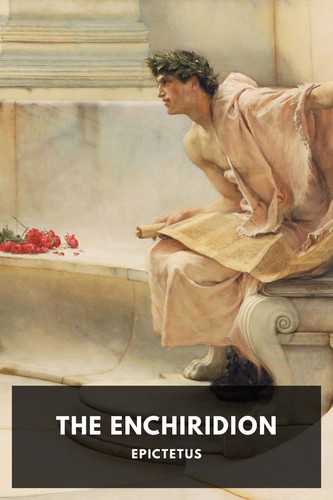
3. The Enchiridion — Epictetus
Quit risk: Low to medium.
The Enchiridion is short. Around 50 pages depending on the translation. Epictetus’s core argument — the dichotomy of control, what’s “up to us” versus what isn’t — is stated on page one and hammered from every angle for the rest of it.
The problem is density of a specific kind. It assumes you’ll sit with a paragraph rather than move through it. Readers used to narrative will keep waiting for a story that never comes. Pace it like a devotional text — one section, then stop — and it works. Treat it like a regular book and you’ll feel nothing happened and give up around chapter 20.
Whether to start with the Enchiridion or the longer Discourses depends on what kind of reader you are. The full comparison of both Epictetus texts makes the case for each.
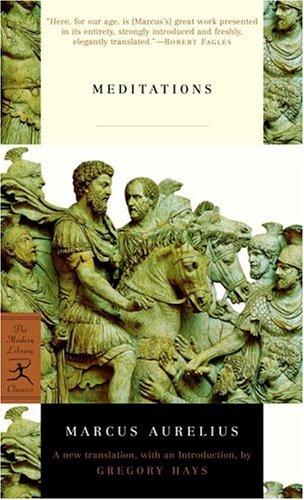
4. Meditations — Marcus Aurelius (Gregory Hays translation)
Quit risk: Medium.
This is where most people start because it’s the famous one, and that’s partly why it has a body count. Meditations was never meant to be read. Marcus wrote it to himself, in Greek, while running an empire. It has no chapters in the narrative sense, minimal connective tissue, and Book One — a list of thank-yous to people you’ve never met — is one of the worst opening sequences in philosophy.
Skip Book One on your first pass. Start at Book Two. Read it in short sessions. The Hays translation (Modern Library, 2002) sounds like a person wrote it rather than a committee, which matters more than it should.
If you’re going to buy it, you should know what you’re buying. The full translation comparison for Meditations explains what Hays does that older versions don’t, and which editions to avoid entirely.
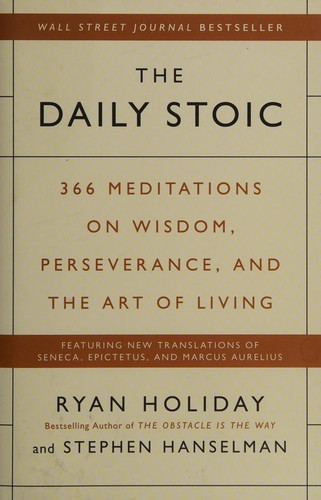
5. The Daily Stoic — Ryan Holiday
Quit risk: Medium to high.
One entry per day, 366 entries, each one a Stoic quote followed by a paragraph of commentary. Designed to be impossible to abandon. In practice, easy to abandon — miss three days, fall behind, and the daily format loses its logic.
The deeper problem: Holiday’s commentary tells you what the quote means rather than letting you sit with it. Interpretation dressed as philosophy, with a productivity gloss. Not worthless, but not the same as reading Stoicism. Read this and nothing else and you’ll have opinions without much grounding in them.
Works as a supplement. Doesn’t work as a foundation.
6. Meditations in a translation that isn’t Hays or Waterfield
Quit risk: High.
The George Long translation is free on Project Gutenberg, which is why many people start with it. It’s Victorian prose, accurate to the Greek, and almost completely alienating to a modern reader. “Occupy thyself with few things” is not wrong, but it creates distance that Hays doesn’t. Robin Waterfield’s 2021 Oxford World’s Classics translation is the other serious modern option and excellent — but Hays is the entry-level recommendation because it’s warmer.
This isn’t a separate book, but the translation choice matters enough to treat it like one. The wrong edition of Meditations has probably ended more Stoicism reading plans than anything else on this list.
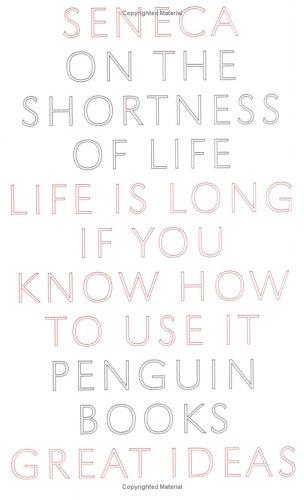
7. On the Shortness of Life — Seneca (standalone edition)
Quit risk: High, for the wrong reasons.
The essay itself is brilliant. Around 30 pages. Seneca’s argument is that you have enough time if you stop wasting it, delivered with the confident cruelty of a man who wasted enormous amounts of it himself. “It is not that we have a short time to live, but that we waste a lot of it” is famous for a reason.
The popular Penguin Great Ideas edition bundles it with two other essays — On Consolation and On Tranquillity of Mind — and many readers lose momentum in the middle material. Treat it as what it is: a very short, very good essay. Read it in one sitting and move on to something longer.
The sequence that works
Robertson first. Then Seneca’s letters in the Penguin selection. Then Meditations with Hays. The full Stoic reading list maps the longer path from there, and where to start with Stoicism makes the case for a single first book if you want one rather than seven.
The Enchiridion fits somewhere in the middle — good once you have context, slightly abstract without it. The Daily Stoic you can pick up at any point. You probably already own it.
Get to the primary sources. Everything else is scaffolding.