The Obstacle Is the Way: Honest Review (Worth It?)
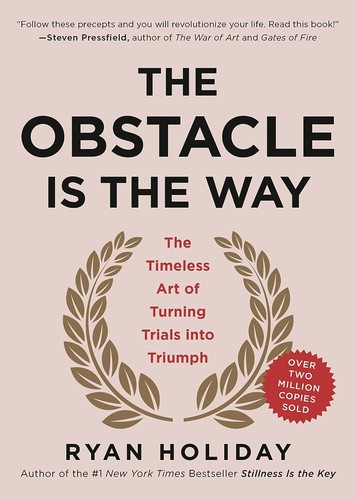
Ryan Holiday’s The Obstacle Is the Way has sold over a million copies, been handed out by NFL coaches, and introduced more people to Marcus Aurelius than any classics department in living memory. That is a genuine achievement. It is also, if you’ve read the actual Stoics, a slightly maddening one — because the book is not quite what it says on the tin.
This is a fair review. The book earns its success in some ways and coasts on the brand in others.
What the Book Actually Does
The central thesis is clean: obstacles are not in the way, they are the way. Adversity is material. The Stoics — Marcus Aurelius especially — taught that every apparent setback contains an opportunity to practice virtue, and Holiday translates that idea into modern case studies. Thomas Edison. Ulysses Grant. Amelia Earhart. Abraham Lincoln. The structure is: ancient principle, historical anecdote, punchy takeaway.
It works. The three-part framework — perception, action, will — gives readers a handle on ideas that can feel slippery in the source texts. Holiday is a skilled packager.
And the Marcus Aurelius passage that gives the book its title is real. Meditations 5.20 — in Gregory Hays’s translation: “The impediment to action advances action. What stands in the way becomes the way.” Holiday didn’t invent the idea; he found a genuinely good one and ran with it.
Where It Thins Out
The honest problem is that The Obstacle Is the Way treats Stoicism as a success system. The ancient Stoics did not. They were indifferent to outcomes in a way Holiday’s framework can’t quite accommodate, because a framework structured around “obstacles become advantages” still cares about winning.
Marcus Aurelius was not trying to crush his obstacles. He was trying to accept that some obstacles don’t move, that good men fail, that empires fall, and that virtue is the only thing worth calling good regardless of what happens. That’s a harder, less marketable idea.
The historical anecdotes are the shakiest part. Edison “turned” his factory fire into an opportunity. Lincoln persisted through disaster. These vignettes are entertaining and sometimes accurate — but they’re curated. Plenty of people faced their obstacles with Stoic equanimity and still lost. The book doesn’t have room for that story, because the message requires a useful ending.
There’s also a translation problem. Holiday quotes Marcus Aurelius throughout but uses several translations inconsistently, sometimes paraphrasing without attribution. If you want the actual text, Gregory Hays’s Meditations is cleaner — and more philosophically honest than any quote pulled to support a point.
The Bro-Stoicism Problem
The Obstacle Is the Way was published in 2014. The “Stoic as performance optimization” discourse that followed — from biohackers, hustle-culture accounts, and certain corners of the internet — is not entirely Holiday’s fault. But the book opened the door. When Stoicism is framed primarily as a tool for achieving things, it attracts readers who want to achieve things, and the philosophy gets flattened accordingly.
Marcus Aurelius wrote his journal privately, with no intention of publication, as a reminder to be patient with annoying courtiers, to accept failure, and to remember he would die. That is not a productivity framework. It is a practice of radical acceptance that the hustle-thread crowd tends to skip.
For the full picture of what Holiday’s Stoicism project looks like across multiple books, Ryan Holiday’s Stoicism books in order is worth reading before committing to the whole series.
Who Should Read It
Completely new to Stoicism and need a readable entry point with short chapters and real momentum? The Obstacle Is the Way is a defensible starting point. It won’t mislead you about anything major. It will get you interested in Marcus Aurelius. It might even send you to the actual Meditations.
That last outcome is the best one.
If you already have opinions about Stoicism — if you’ve read Seneca’s letters or worked through the Discourses — you’ll find this thin. You’ll recognize the moves, spot the elisions, and wish Holiday had pushed harder against the places where Stoic philosophy resists being made useful.
A better first book for a serious reader is William Irvine’s A Guide to the Good Life, which makes the same project of applying Stoicism to modern life but engages more honestly with the philosophy’s edges. If you’re ready to skip the intermediaries entirely, where to start with Stoicism points directly at the primary sources.
The Obstacle Is the Way is a good book for what it is: an introduction to applied Stoic thinking, packaged for people who would never pick up Meditations on their own. The core idea is genuinely Stoic. The case studies are motivating.
But it is not philosophy. It is philosophy-adjacent — close enough to point you in the right direction, not close enough to change how you actually think.
Read it if you need the gateway. Then go read the Stoics. They’re blunter, stranger, and considerably more demanding than Holiday’s version — which is exactly what makes them worth the time.