A Guide to the Good Life: Readable, and Not Quite Stoicism
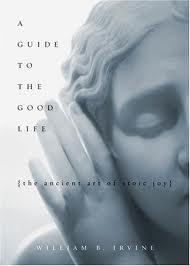
William Irvine’s A Guide to the Good Life: The Ancient Art of Stoic Joy (2008, Oxford University Press, 326 pages) is the book that introduced a lot of people to Stoicism before Ryan Holiday got to them. It’s readable, it’s organized, and it takes the philosophy seriously as a daily practice. It also modifies Stoic doctrine in ways Irvine openly admits but doesn’t always flag loudly enough for readers to notice. Good book, not quite Stoicism, know the difference before you cite it.
What Irvine gets right
The book’s core achievement is making the ancient exercises concrete. Negative visualization, the dichotomy of control, voluntary discomfort — Irvine explains what these practices are, why the Stoics recommended them, and how a person might actually do them. The chapter on negative visualization is better than most popular philosophy writing on the subject. He traces the logic clearly: briefly imagining losing something you value makes you appreciate it rather than take it for granted, without the paralysis that full-time pessimism produces.
He’s also honest that he came to Stoicism the way a lot of people do — looking for a philosophy to live by, not an academic specialty. That keeps the writing grounded. No hedging, no refusal to commit. Irvine commits. That’s useful.
For reading order, this book fits somewhere after an introduction but before you’ve sat down with the primary sources. It’s stronger than The Daily Stoic as a gateway because it makes arguments rather than just excerpts, but it should point you toward Epictetus and Marcus Aurelius rather than replace them.
The modification you need to know about
Here is where Irvine diverges from classical Stoicism, and where the book’s own footnotes confirm it.
The classical Stoics held that virtue is the only true good. Externals — health, reputation, wealth, even family — are “preferred indifferents.” Worth pursuing when you can do so without compromising virtue, but without genuine value in themselves. This is not a minor footnote in Stoic theory; it’s foundational. The whole architecture of the dichotomy of control rests on it. Epictetus is relentless on the point, and Marcus Aurelius keeps returning to it throughout the Meditations.
Irvine finds this position too stark. He argues instead for what he calls a “tranquility” goal — the pursuit of a calm, satisfied life — and treats that as the telos of his modified Stoicism. Virtue still matters, but it’s in service of tranquility rather than being the point itself. He says this explicitly, which is to his credit. What he doesn’t flag loudly enough is that this shift is precisely where Stoic philosophers drew their hardest lines. The Stoics weren’t quietists trying to feel calm; they were trying to act rightly regardless of how that felt.
If you’re curious about what the dichotomy of control actually says in the original texts, you’ll notice the difference immediately. Epictetus isn’t primarily interested in your tranquility. He’s interested in your will being aligned with reason and virtue. The emotional benefit is a byproduct, not the goal.
How the shift changes the practices
This isn’t a philosophical quibble. The move from virtue to tranquility changes how you read the practical advice.
Take negative visualization. In Irvine’s framing, you do it to feel better — to generate gratitude and ward off hedonic adaptation. That’s a legitimate psychological insight. But for Epictetus, meditating on loss is preparation for not being destabilized when it happens, so that your rational judgment stays unclouded. The goal is steadiness of character, not a warmer feeling about your coffee. The practice looks the same from the outside; the instruction to yourself while doing it is different.
Same with voluntary discomfort. Irvine recommends it as inoculation against softness. The Stoics recommended it partly because they thought most of what we call discomfort involves a false judgment — that the discomfort is bad — and training yourself to suspend that judgment is a different project from training yourself to tolerate inconvenience.
Neither difference makes Irvine’s advice wrong. They make it a slightly different project than the one Epictetus was running.
Who should read it
If you’ve never read anything about Stoicism and want a contemporary writer to walk you through the practices with modern examples, this is a reasonable starting point. Better organized than most introductions, more honest about its departures from doctrine than most popular philosophy.
If you’ve already read Epictetus — either the Enchiridion or the Discourses — you’ll read Irvine differently. You’ll notice the moments where tranquility quietly replaces virtue as the organizing aim. That’s not a reason to skip it; it’s a reason to read it with one eyebrow up.
If you’re deciding between this and going straight to the primary sources: go to the primary sources. The Meditations is shorter than most people assume and more immediately useful than the intermediary. Seneca’s letters are warmer and funnier than his reputation suggests — the Letters from a Stoic translation question is worth settling before you buy. Irvine is a good companion to those texts, not a substitute.
Read it for the practical scaffolding. Just don’t treat it as the whole building.