How to Be a Stoic by Pigliucci: An Honest Review
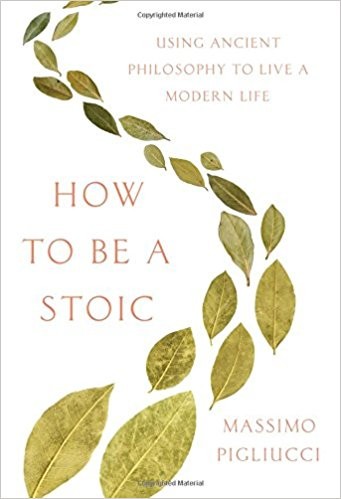
The short answer: How to Be a Stoic is the book you give someone who thinks Stoicism is interesting but suspects the ancient texts might defeat them. Pigliucci, a philosopher with a biology background who came to Stoicism mid-career, writes like someone who had to argue himself into it — and that argument, conducted on the page, is the book’s main strength.
It’s not the deepest Stoicism book. It’s the most honest gateway.
What Pigliucci is actually doing
The book’s central device is a series of imagined conversations with Epictetus. Pigliucci presents a Stoic problem — handling anger, coping with illness, thinking about death — then works through what Epictetus would say, cross-referenced against modern psychology and evolutionary biology where the evidence lines up. When it doesn’t line up, he says so.
This is rarer than it sounds. Most popular Stoicism books treat the ancient texts as though they’re self-evidently correct. Pigliucci has a scientist’s reflex: he wants to know if the claims hold. His conclusion, roughly, is that Stoic practice is well-grounded in what we now know about human cognition and emotion, while some of the underlying Stoic metaphysics — the providential universe, the rational logos permeating matter — is not something he can endorse, and he doesn’t pretend to.
That intellectual honesty is either the book’s best feature or its main frustration, depending on what you came for.
The structure
Twelve chapters, around 250 pages. Each chapter takes a practical theme — desire, loss, dealing with difficult people, illness, death — and walks through it using Epictetan guidance as the skeleton. The dichotomy of control gets a full treatment early and returns throughout. The Stoic disciplines (desire, action, assent) get introduced gradually rather than dumped on the reader at once, which is the right call.
There’s a bibliography and suggestions for further reading. The appendix on Stoic spiritual exercises is worth keeping. Chapter 7, on how to handle other people, is probably the most immediately useful section for readers who arrive via Stoic internet content.
Where it’s better than the alternatives
The comparison that matters for most readers is against Ryan Holiday’s Stoicism books and The Daily Stoic. Those books are faster reads. They’re also thinner philosophy — Holiday selects the passages that motivate and skips the structure around them.
Pigliucci wants you to understand why the practice is supposed to work, not just that it has worked for high-performing people throughout history. He explains the three disciplines. He distinguishes Stoic preferred indifferents from actual indifference. He notes that Stoicism is a philosophy, not a mood.
Readers who finish How to Be a Stoic are better prepared to read the Discourses of Epictetus or Meditations than readers who finished any of Holiday’s books. They have a map. Holiday gives you highlights; Pigliucci gives you the key.
Lessons in Stoicism by John Sellars is the other obvious comparison. Sellars is shorter, drier, and more strictly historical. Pigliucci is warmer and more personal, more willing to disagree with the Stoics in public, and more engaged with contemporary science. Sellars is better if you want philosophy; Pigliucci is better if you want practice.
Who will find it a slog
The academic asides. They’re real. Pigliucci cannot resist the occasional footnote-in-prose about evolutionary game theory or metaethics. None of it is impenetrable, but if you came to the book because your therapist mentioned cognitive behavioral therapy has Stoic roots and you want to know more, some passages will feel like they’re happening in another conversation.
Readers who have already read widely in Stoicism will find the first third slow. The Enchiridion and Letters from a Stoic both cover the same ground in the original voice, with more texture. Pigliucci is writing for people who haven’t read those yet.
And if you arrive hoping for a productivity manual — some Stoic framework for crushing your goals — you will be disappointed. Pigliucci is explicitly not writing bro-Stoicism. He makes this clear early. His version of Stoicism is concerned with virtue, character, and the question of how to live, not with competitive advantage. Marcus Aurelius would probably have approved.
The verdict
This is the best philosophically serious book for someone at the beginning of Stoic reading. It earns that position because Pigliucci does something unusual: he tells you what he believes and why, and he tells you where he’s unsure. The imagined Epictetus dialogues work better than they have any right to.
Read it before the Discourses, not instead of them.